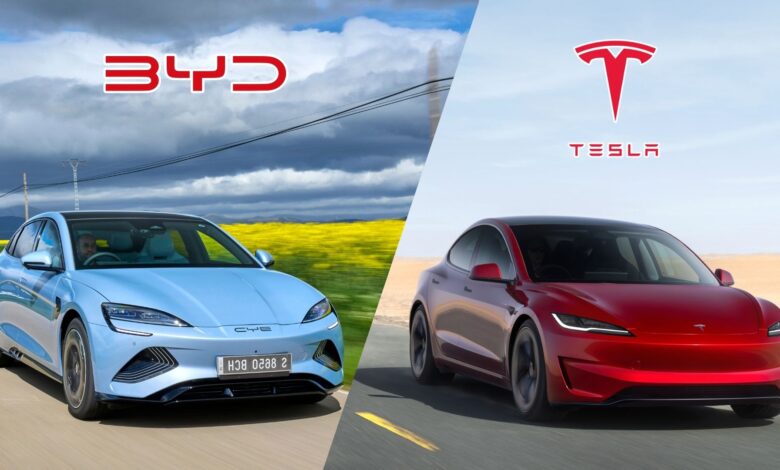
The global electric car market of 2025 is a war zone dominated by two titans — BYD (Build Your Dreams) and Tesla. No longer unstoppable in the electric vehicle arena, Tesla has to contend with an ambitious Chinese foe that is redefining the playbook. The only question now is not if BYD will overtake Tesla, but when.
BYD’s Meteoric Rise
BYD produced more than 3 million EV and hybrid deliveries worldwide in 2024, while Tesla managed to sell 1.8 million BEVs. Tesla still dominates overall electric car sales, but BYD’s hybrid strategy has allowed it to overwhelm the majority of the most significant growth markets with sparse charging infrastructure.
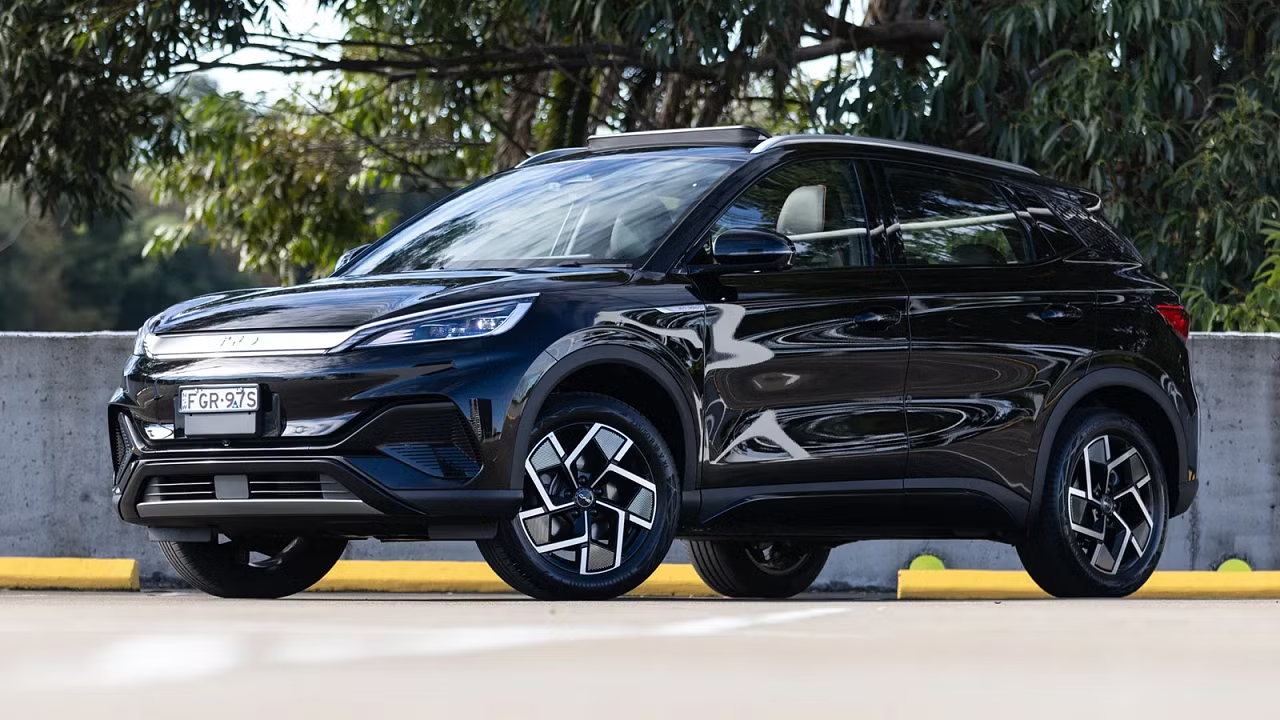
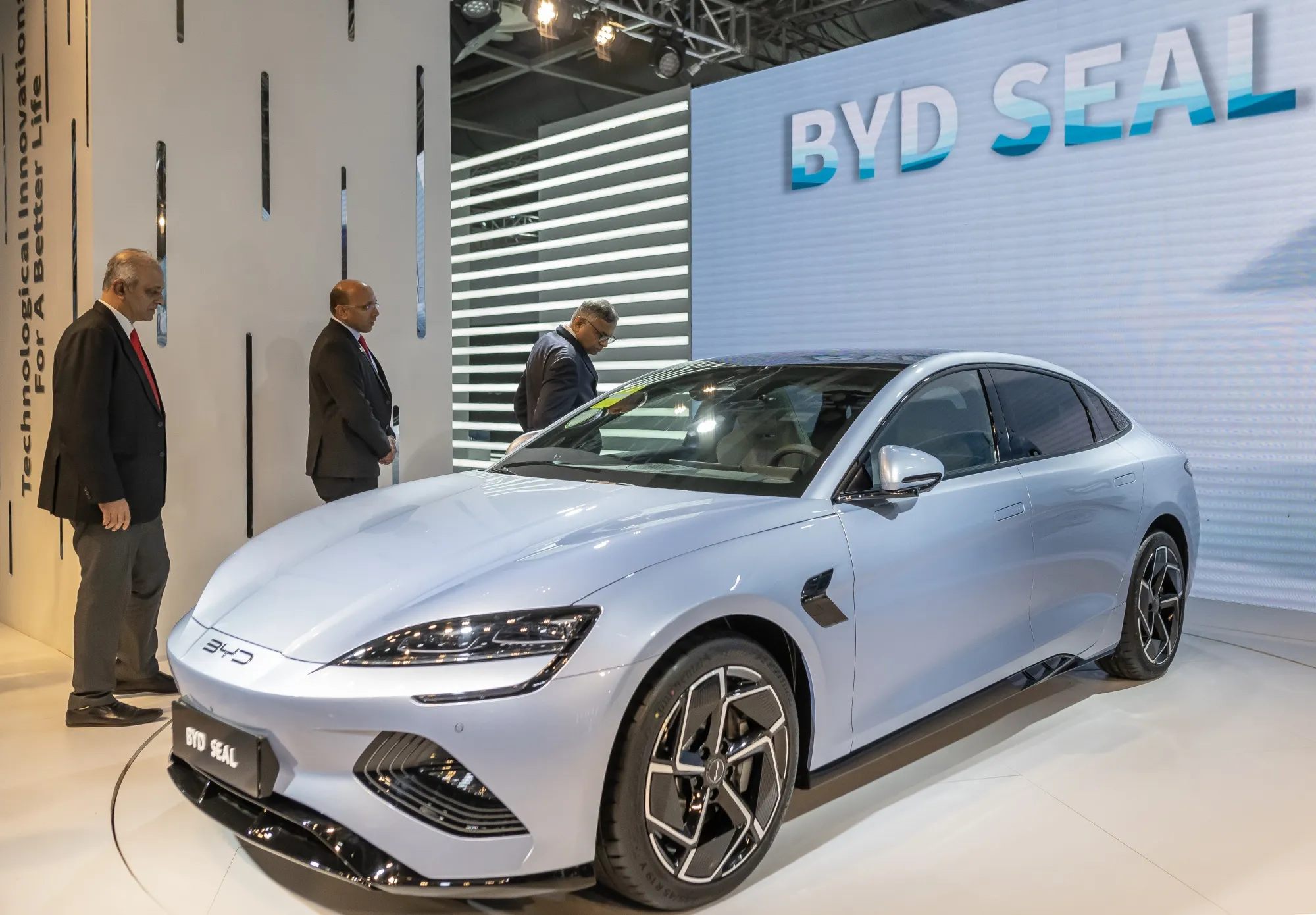
BYD Atto 3, Dolphin, and Seal have also become family names in China and globally with state-of-the-art technology at affordable prices. Its pocket-friendly operation via its vertically integrated supply chain — battery, chip, and motor manufacturing in-house — allows it to maintain affordability despite growing global competition.
Tesla’s Strategic Response
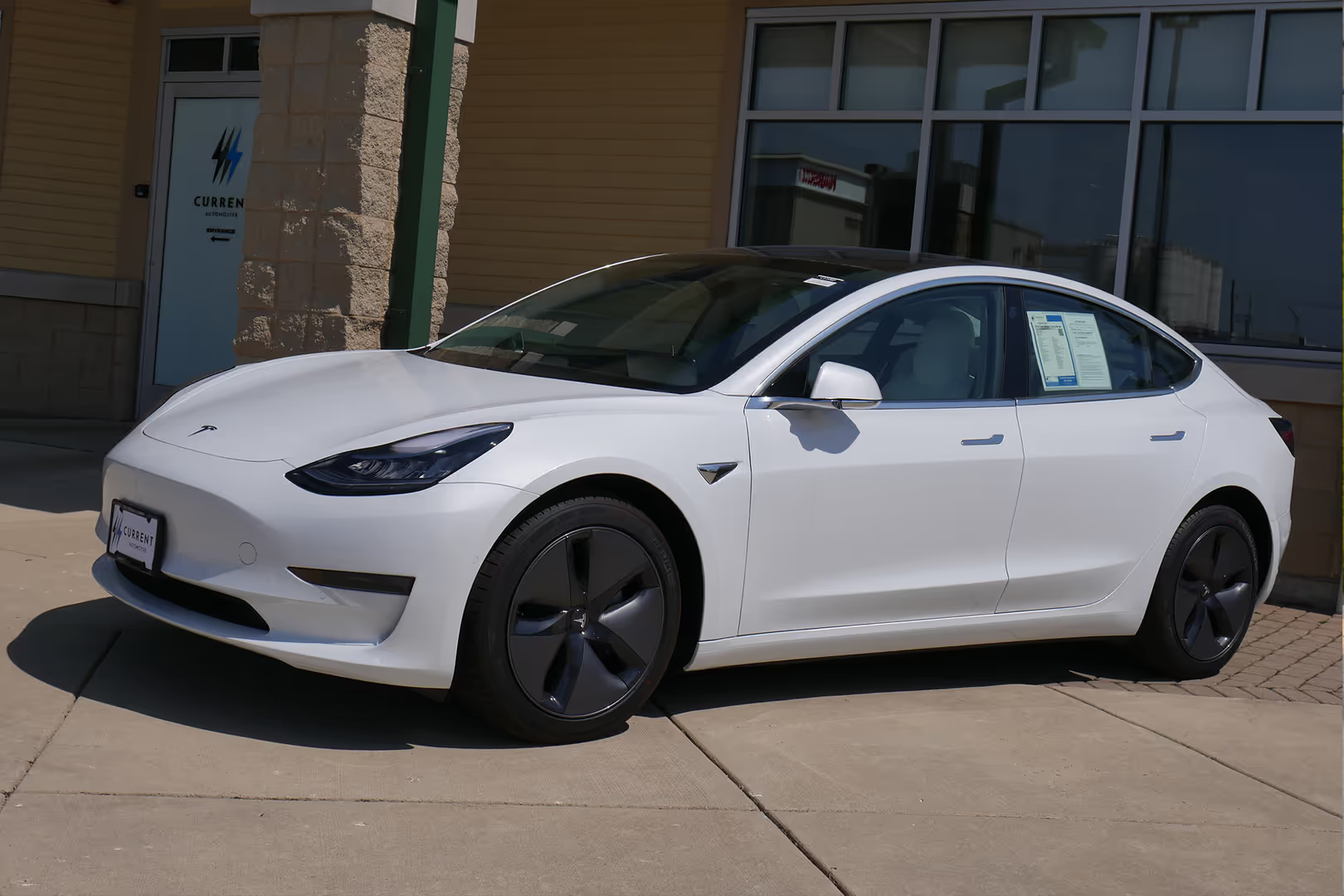
Tesla remains the leader of the world’s luxury corner of the EV market, with Model Y and Model 3 as best-selling electric cars globally. The Musk agenda includes ramping up production, improving battery range, and constructing additional global Gigafactories — from Texas to Mexico and, finally, India.
Tesla’s trump card is its Full Self-Driving (FSD) software, 4680 battery technology, and Supercharger network. These are the wellspring of a technological lead Tesla has that BYD has yet to catch up on, especially in the Western markets where consumer trust and charging networks are king.
East vs West: The New EV Divide
The EV war also works to highlight ever-widening East-West chasms. Tesla continues to hold sway over North America and Europe, leveraging its luxury brand image and installed customer base. BYD is the undisputed leader in China, the world’s largest EV market, where home turf benefits of incentive and price have made it mass-market champion.
In 2025, BYD ventured into Thailand, Brazil, and Hungary, attesting to its enthusiasm to go completely global. Tesla, on the other hand, is focused on making the cars less expensive and stay profitable in the face of more competition and economic instability.
Technology and Innovation Drive the Competition
Whereas market share is determined by sales volume, technology decides the future. Tesla’s AI-based automation and software are unmatched. Its vehicles are nothing but “computers on wheels” with the ability to perform over-the-air updates and autonomous upgradation.
BYD, on the other hand, is closing in with innovative battery life and safety. Its Blade Battery technology is higher in performance, low degradation, and high level of safety — qualities that have won it over other car makers looking for stable battery partners.
Who’s Winning in 2025
In the fight to sell EVs in 2025, Tesla is still in the lead in pure battery electric vehicle sales but BYD in combined EV and plug-in hybrid sales. Both of them dream the same about the future of electricity — Tesla’s end-to-end fully electric solution versus BYD’s rational hybrid solution.
Ultimately, the consumer will gain the most. Even as both companies battle on availability, price, and innovation, electric mobility is gaining steam around the world like never before.
The Road Ahead
The fight between Tesla and BYD is shaping the future of the EV revolution. BYD’s volume and price are pushing Tesla’s brand cachet and innovation to the test. The next couple of years will determine if Tesla can maintain its position of dominance — or if BYD’s global charge will make it the new EV king.
One thing is for sure: in 2025, the world EV market is for those able to walk the tightrope of technology, affordability, and sustainability — and Tesla and BYD are leaders in that revolution.